Understanding the Economy: 7 Powerful Ways the Domestic and Global Economy Shapes Your Money in 2026

yelli

June 3, 2026

4:24 am

Economics vs. Economy – The Difference Between the Study and the System πŸŽ“πŸŒπŸ“š

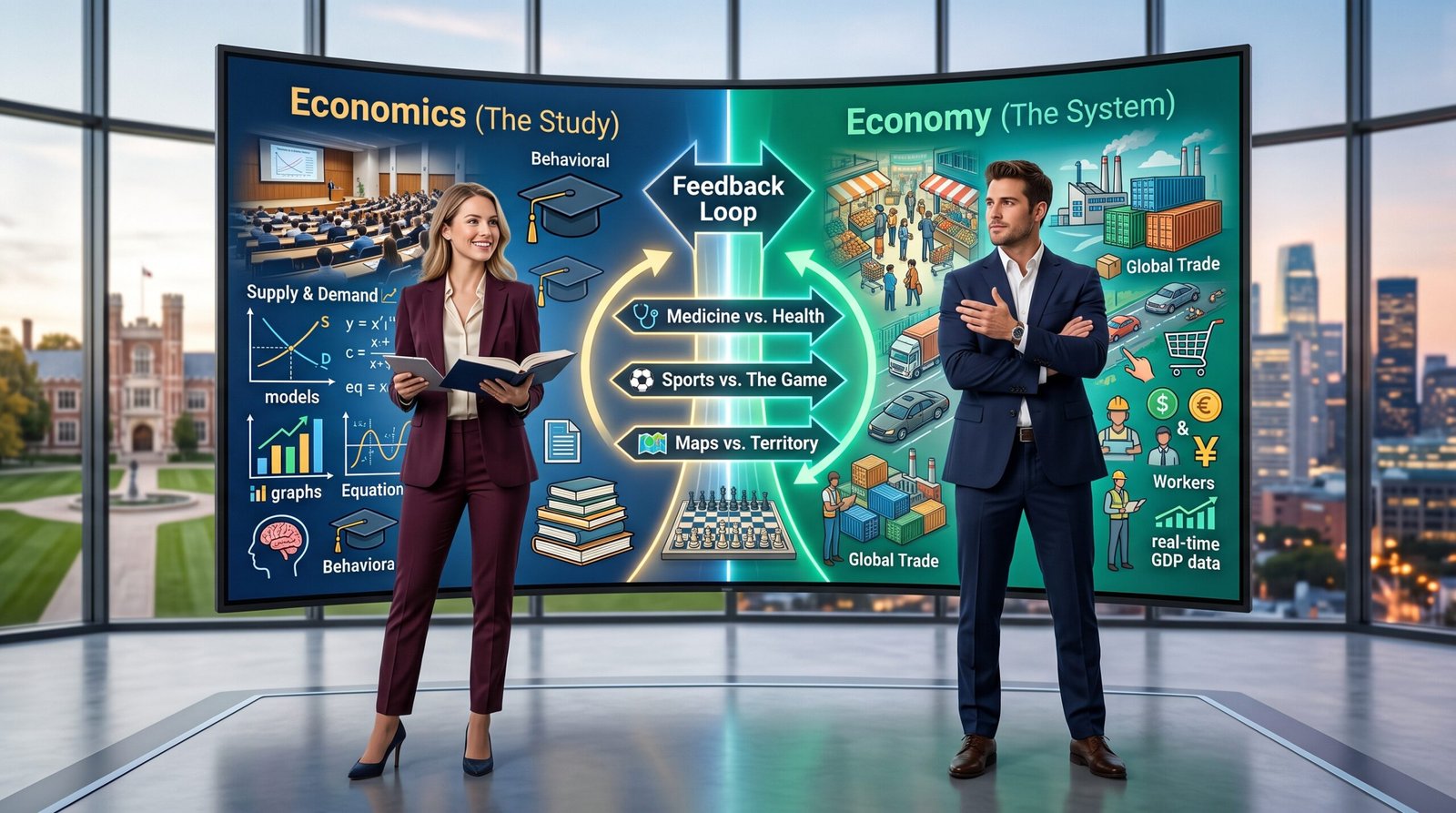
Understanding the economy economics vs economy difference between the study and the system guide featuring side-by-side comparison of economics (theory, models, principles) and economy (real-world production, distribution, consumption), analogies (medicine vs health, sports vs game, maps vs territory), and feedback loop visualization
πŸŽ“πŸŒ Understanding the economy through economics vs. economy – the difference between the study and the system. Learn the key distinctions: Economics = social science (theoretical, analytical, models, principles); Economy = real-world system (production, distribution, consumption, jobs, prices, GDP). Analogies: Medicine vs Health, Sports vs Game, Maps vs Territory. πŸ‡ΊπŸ‡ΈπŸ‡¬πŸ‡§πŸ‡ͺπŸ‡ΊπŸŒπŸ‡¦πŸ‡ΊπŸŒ

Understanding the Distinction Between Economic Theory and the Real-World Economy

Study. System. Distinguish.Β πŸ”‘

WhenΒ understanding the economy, one of the most common and important distinctions to master is the difference betweenΒ economicsΒ (the study) and theΒ economyΒ (the system). Whether you are in theΒ United States πŸ‡ΊπŸ‡Έ, United Kingdom πŸ‡¬πŸ‡§, Europe πŸ‡ͺπŸ‡Ί, Asia 🌏, Australia πŸ‡¦πŸ‡Ί, or anywhere else globally 🌐, confusing these two terms can lead to misunderstanding how the world works, how policies are made, and how your financial decisions fit into the bigger picture.

In this comprehensive Segment, we explore:

  • What is Economics?Β (The social science)

  • What is an Economy?Β (Brief reminder – see Section 2 for full details)

  • Key differencesΒ (Theory vs. Practice, Analysis vs. Reality)

  • Side-by-side comparisonΒ (Table, examples, analogies)

  • Why the distinction mattersΒ (For students, investors, policymakers, and citizens)

  • How they interactΒ (The feedback loop)

πŸ‘‰ Master both economics and the economy.Β [Get economics courses and financial analysis tools here]Β πŸ“š

What Is Economics? (The Study)

The Simple Definition

EconomicsΒ is the social science that studies how individuals, businesses, governments, and societies allocateΒ scarce resourcesΒ to satisfyΒ unlimited wants and needs. It examines production, distribution, and consumption of goods and services throughΒ theories, models, and principles.

Simple Definition: Economics is the study of how people make choices under scarcity. 🧠

Key Characteristics of Economics

CharacteristicDescription
NatureTheoretical, analytical, abstract
FocusPrinciples, models, theories, laws
MethodologyDevelops hypotheses, builds models, tests with data, refines theories
OutputBooks, research papers, theories, models, policy recommendations
PractitionersEconomists, academics, researchers, policy analysts
Key QuestionsWhy do prices rise? How do consumers decide? What causes recessions?

The Main Branches of Economics

BranchFocusKey Questions
MicroeconomicsIndividual consumers, firms, and industriesHow do consumers decide what to buy? How do firms set prices?
MacroeconomicsEntire economy (national/global trends)What causes inflation? How can we reduce unemployment?
Development EconomicsPoverty, growth in low-income countriesHow can poor countries escape poverty?
Behavioral EconomicsPsychology and irrational decision-makingWhy do people make “bad” economic choices?
Environmental EconomicsPollution, resources, climate changeHow do we price carbon? What’s the cost of climate change?

Examples:

πŸ“Β Economics in Action (Example):Β An economist studies why inflation rose in 2022 by analyzing data, building models (supply shocks + demand stimulus), and publishing research. She does notΒ setΒ interest rates orΒ changeΒ pricesβ€”she studies and explains what happened.

πŸ“Β Global Example:Β At theΒ European Central Bank (ECB)Β , teams of economists analyze eurozone data, build inflation forecasts, and advise policymakers. But the economists themselves do not vote on interest ratesβ€”they provide analysis. The distinction between studying the economy (economics) and managing it (policy) is clear.

πŸ‘‰ Learn economics from the best.Β [Get online economics courses here]Β πŸŽ“

What Is an Economy? (The System – Brief Reminder)

Note:Β A full explanation of the economy is provided inΒ Segment 2. This is a brief reminder for comparison purposes.

The Simple Definition

AnΒ economyΒ is theΒ real-world systemΒ of production, distribution, and consumption of goods and services within a specific region or country. It represents theΒ practical implementationΒ of economic principles.

Simple Definition: The economy is the actual system where economic activities happen. 🏭

Key Characteristics of an Economy

CharacteristicDescription
NaturePractical, real-world, concrete
FocusActual production, distribution, consumption, jobs, prices, GDP
ComponentsHouseholds, firms, governments, financial system, central bank
OutputGoods (cars, phones, food), services (healthcare, education, banking), jobs, GDP
ParticipantsEveryone (consumers, workers, business owners, government officials, central bankers)
Key DataGDP, inflation rate, unemployment rate, stock market indices, trade balances

Examples:

πŸ“Β Economy in Action (Example):Β In 2022, theΒ United States economyΒ experienced 9.1% inflation. Real prices rose: gasoline from $2.50 to $5.00/gallon, rent increased, groceries cost more. This was theΒ economyβ€”the real systemβ€”not economics (the study).

πŸ“Β Global Example:Β TheΒ German economyΒ in 2022 faced an energy crisis after Russia invaded Ukraine. Natural gas prices soared; factories reduced production; households paid higher heating bills. These were real economic outcomesβ€”theΒ economyΒ in action.

πŸ‘‰ Understand the real economy.Β [Get economic data and analysis tools here]Β πŸ“Š

Economics vs. Economy: Key Differences (Side-by-Side)

Comparison Table

AspectEconomics πŸŽ“Economy 🌍
DefinitionAΒ social scienceΒ that studies resource allocation, production, distribution, and consumption.TheΒ real-world systemΒ in which production, distribution, and consumption take place.
NatureTheoretical, analytical, abstractPractical, real-world, concrete
FocusPrinciples, models, theories, lawsActual resources, production, jobs, prices, GDP
Key QuestionsWhy do prices rise? How do consumers decide? What causes recessions?What is the current inflation rate? How many jobs were added this month? What is GDP?
ExamplesSupply and demand theory, Keynesian economics, game theory, prospect theoryThe US economy, Chinese economy, global economy, the gig economy, the circular economy
OutputBooks, research papers, theories, models, policy recommendationsGoods (cars, phones, food), services (healthcare, education, banking), jobs, GDP
PractitionersEconomists, academics, researchers, policy analystsEveryone (consumers, workers, business owners, government officials, central bankers)
MeasurementQuality of theories, predictive accuracy, peer reviewGDP, inflation rate, unemployment rate, stock market indices, trade balances
Time OrientationSeeks timeless principles and laws (but they evolve)Real-time, historical, and forward-looking (forecasts)

Visual Comparison

β”Œβ”€β”€β”€β”€β”€β”€β”€β”€β”€β”€β”€β”€β”€β”€β”€β”€β”€β”€β”€β”€β”€β”€β”€β”€β”€β”€β”€β”€β”€β”€β”€β”€β”€β”€β”€β”€β”€β”€β”€β”€β”€β”€β”€β”€β”€β”€β”€β”€β”€β”€β”€β”€β”€β”€β”€β”€β”€β”€β”€β”€β”€β”€β”€β”€β”€β”€β”€β”€β”€β”€β”€β”€β”€β”€β”€β”€β”€β”
β”‚                    ECONOMICS (The Study) vs. ECONOMY (The System)          β”‚
β”œβ”€β”€β”€β”€β”€β”€β”€β”€β”€β”€β”€β”€β”€β”€β”€β”€β”€β”€β”€β”€β”€β”€β”€β”€β”€β”€β”€β”€β”€β”€β”€β”€β”€β”€β”€β”€β”€β”€β”€β”€β”€β”€β”€β”€β”€β”€β”€β”€β”€β”€β”€β”€β”€β”€β”€β”€β”€β”€β”€β”€β”€β”€β”€β”€β”€β”€β”€β”€β”€β”€β”€β”€β”€β”€β”€β”€β”€β”€
β”‚                                                                             β”‚
β”‚   ECONOMICS (The Study)                    ECONOMY (The System)            β”‚
β”‚   β”Œβ”€β”€β”€β”€β”€β”€β”€β”€β”€β”€β”€β”€β”€β”€β”€β”€β”€β”€β”€β”€β”€β”€β”€β”€β”€β”              β”Œβ”€β”€β”€β”€β”€β”€β”€β”€β”€β”€β”€β”€β”€β”€β”€β”€β”€β”€β”€β”€β”€β”€β”€β”€β”€β”     β”‚
β”‚   β”‚ β€’ Theories              β”‚              β”‚ β€’ Production            β”‚     β”‚
β”‚   β”‚ β€’ Models                β”‚              β”‚ β€’ Distribution          β”‚     β”‚
β”‚   β”‚ β€’ Principles            β”‚    ────►     β”‚ β€’ Consumption           β”‚     β”‚
β”‚   β”‚ β€’ Laws                  β”‚   (Studies)  β”‚ β€’ Jobs                   β”‚     β”‚
β”‚   β”‚ β€’ Frameworks            β”‚              β”‚ β€’ Prices                 β”‚     β”‚
β”‚   β”‚ β€’ Research              β”‚              β”‚ β€’ GDP                    β”‚     β”‚
β”‚   β””β”€β”€β”€β”€β”€β”€β”€β”€β”€β”€β”€β”€β”€β”€β”€β”€β”€β”€β”€β”€β”€β”€β”€β”€β”€β”˜              β””β”€β”€β”€β”€β”€β”€β”€β”€β”€β”€β”€β”€β”€β”€β”€β”€β”€β”€β”€β”€β”€β”€β”€β”€β”€β”˜     β”‚
β”‚             β”‚                                          β”‚                    β”‚
β”‚             β”‚ (Informs)                                β”‚ (Provides data)    β”‚
β”‚             β””β”€β”€β”€β”€β”€β”€β”€β”€β”€β”€β”€β”€β”€β”€β”€β”€β”€β”€β”¬β”€β”€β”€β”€β”€β”€β”€β”€β”€β”€β”€β”€β”€β”€β”€β”€β”€β”€β”€β”€β”€β”€β”€β”˜                    β”‚
β”‚                                β”‚                                            β”‚
β”‚                                β–Ό                                            β”‚
β”‚                    β”Œβ”€β”€β”€β”€β”€β”€β”€β”€β”€β”€β”€β”€β”€β”€β”€β”€β”€β”€β”€β”€β”€β”€β”€β”€β”€β”                             β”‚
β”‚                    β”‚   FEEDBACK LOOP         β”‚                             β”‚
β”‚                    β”‚   Economics ←→ Economy  β”‚                             β”‚
β”‚                    β””β”€β”€β”€β”€β”€β”€β”€β”€β”€β”€β”€β”€β”€β”€β”€β”€β”€β”€β”€β”€β”€β”€β”€β”€β”€β”˜                             β”‚
β”‚                                                                             β”‚
β””β”€β”€β”€β”€β”€β”€β”€β”€β”€β”€β”€β”€β”€β”€β”€β”€β”€β”€β”€β”€β”€β”€β”€β”€β”€β”€β”€β”€β”€β”€β”€β”€β”€β”€β”€β”€β”€β”€β”€β”€β”€β”€β”€β”€β”€β”€β”€β”€β”€β”€β”€β”€β”€β”€β”€β”€β”€β”€β”€β”€β”€β”€β”€β”€β”€β”€β”€β”€β”€β”€β”€β”€β”€β”€β”€β”€β”€β”˜

Examples:

πŸ“Β Domestic Economy Example:Β EconomicsΒ explains why the Federal Reserve raises interest rates when inflation is high (theory of monetary policy). TheΒ US economyΒ is the actual system where higher interest rates cause mortgage payments to increase, reducing housing demand and cooling inflation.

πŸ“Β Global Example:Β EconomicsΒ explains the theory of comparative advantage (countries should specialize and trade). TheΒ European economyΒ is the actual system where Germany exports cars to France, France exports wine to Germany, and both benefit.

πŸ‘‰ Apply economic principles to real-world markets.Β [Get investment and market analysis tools here]Β πŸ“ˆ

Simple Analogies to Remember the Difference

Analogy #1: Medicine vs. Health

AnalogyEconomicsEconomy
MedicineΒ is the study of health, disease, and treatment.Economics is the study of the economy.Β 
HealthΒ is the actual state of a patient (vital signs, symptoms, diagnosis).TheΒ economyΒ is the actual state of economic activity (GDP, inflation, jobs).Β 

A doctor studies medicine (the science) to treat a patient’s health (the reality). An economist studies economics (the science) to understand the economy (the reality).

Analogy #2: Sports vs. The Game

AnalogyEconomicsEconomy
Sports scienceΒ is the study of rules, strategies, training methods, and statistics.Economics is the study of economic principles and models.Β 
The actual gameΒ is the real-time action: scores, wins/losses, player performance.TheΒ economyΒ is the real-time activity: production, jobs, prices, GDP.Β 

A sports analyst studies sports science to understand the game. An economist studies economics to understand the economy.

Analogy #3: Maps vs. Territory

AnalogyEconomicsEconomy
A mapΒ is a representation, a model, a simplification of reality.Economics is a map of the economy.Β 
The territoryΒ is the actual physical land.TheΒ economyΒ is the actual economic activity.Β 

The map is not the territory.Β Economics is not the economyβ€”it is our attempt to understand, model, and predict the economy.

Examples:

πŸ“Β Domestic Economy Example:Β An economist might predict that raising interest rates will lower inflation (economics). But when theΒ US economyΒ actually experiences rising rates, the outcome might be different than predicted because the economy is complex and people are irrational (the map is not the territory).

πŸ“Β Global Example:Β An economist might predict that a trade war will reduce GDP (economics). But when theΒ US-China trade warΒ actually happened, the effects were complexβ€”some prices rose, some supply chains shifted, but the US economy did not collapse. The map (economics) simplified reality; the territory (economy) was messier.

πŸ‘‰ Learn to distinguish theory from reality.Β [Get critical thinking and economic analysis tools here] 🧠

Why the Distinction Matters

For Students and Learners

Why It MattersExplanation
Avoid confusionMany people confuse economics (the study) with the economy (the system). Understanding the difference clarifies conversations and readings.
Better learningKnowing the difference helps you organize knowledge: theories belong to economics; data belongs to the economy.
Career pathsEconomists study economics; businesspeople, policymakers, and workers participate in the economy.

For Investors and Businesspeople

Why It MattersExplanation
Theory vs. PracticeEconomic theories (e.g., efficient markets hypothesis) don’t always hold in the real economy (behavioral biases, irrational exuberance).
Policy impactUnderstanding economics helps predict how policy changes (tax cuts, interest rate hikes) will affect the real economy (your business, your investments).
Risk managementEconomic models can help you assess risks (recession probability, inflation expectations) and adjust your portfolio or business strategy.

For Policymakers and Citizens

Why It MattersExplanation
Informed decisionsPolicymakers use economics to design policies; citizens need to understand both to evaluate those policies.
Real-world constraintsEconomic theories are abstract; the real economy has frictions (imperfect information, transaction costs, irrational behavior).
Trade-offsEconomics reveals trade-offs (e.g., inflation vs. unemployment). The real economy experiences them.

Examples:

πŸ“Β Domestic Economy Example:Β In theΒ United States, theΒ Phillips CurveΒ is an economic theory suggesting a trade-off between inflation and unemployment. In the realΒ US economy, this relationship has broken down at times (1970s stagflation; 2020s low unemployment with falling inflation), illustrating why theory and reality can diverge.

πŸ“Β Global Example:Β InΒ Europe (UK, Germany, France)Β , the theory ofΒ comparative advantageΒ predicts that Brexit would reduce UK-EU trade, harming both. In the realΒ European economy, Brexit did reduce trade, but the effects were smaller than some models predicted due to adaptations (new trade agreements, supply chain adjustments).

πŸ‘‰ Bridge the gap between theory and practice.Β [Get economic research and real-time data tools here]Β πŸ“‰

How Economics and the Economy Interact (The Feedback Loop)

Economics Informs the Economy

DirectionExplanationExample
Economic research β†’ PolicyEconomists study the economy, develop theories, test them with data, and recommend policies.Research on the minimum wage informs congressional debates and state legislation.
Economic models β†’ Business strategyFirms use economic models (pricing, demand forecasting, game theory) to make decisions.Airlines use game theory to set prices (matching competitors’ discounts).
Economic education β†’ WorkforcePeople who study economics become better workers, managers, and entrepreneurs.An economics major understands opportunity cost, marginal analysis, and market structures.

The Economy Informs Economics

DirectionExplanationExample
Real-world data β†’ New theoriesObservations of the economy lead to new economic theories or modifications of old ones.The 2008 financial crisis led to new research on financial regulation, systemic risk, and “too big to fail.”
Economic history β†’ LessonsPast economic events (Great Depression, 1970s stagflation, 2008 crisis) teach economists what works and what doesn’t.The Fed’s aggressive response to COVID-19 was informed by the slow response to the 1930s Depression.
Natural experiments β†’ EvidenceReal-world changes (tax reforms, trade agreements, minimum wage increases) allow economists to test theories.The minimum wage increase in Seattle (2014-2021) allowed economists to study employment effects.

The Feedback Loop Diagram

β”Œβ”€β”€β”€β”€β”€β”€β”€β”€β”€β”€β”€β”€β”€β”€β”€β”€β”€β”€β”€β”€β”€β”€β”€β”€β”€β”€β”€β”€β”€β”€β”€β”€β”€β”€β”€β”€β”€β”€β”€β”€β”€β”€β”€β”€β”€β”€β”€β”€β”€β”€β”€β”€β”€β”€β”€β”€β”€β”€β”€β”€β”€β”€β”€β”€β”€β”€β”€β”€β”€β”€β”€β”€β”€β”€β”€β”€β”€β”
β”‚                    THE ECONOMICS-ECONOMY FEEDBACK LOOP                      β”‚
β”‚                                                                             β”‚
β”‚   β”Œβ”€β”€β”€β”€β”€β”€β”€β”€β”€β”€β”€β”€β”€β”€β”€β”€β”€β”€β”€β”€β”€β”€β”€β”€β”€β”€β”€β”€β”€β”€β”€β”€β”€β”€β”€β”€β”€β”€β”€β”€β”€β”€β”€β”€β”€β”€β”€β”€β”€β”€β”€β”€β”€β”€β”€β”€β”€β”€β”€β”€β”€β”€β”€β”€β”€β”€β”€β”€β”€β”   β”‚
β”‚   β”‚                         ECONOMICS (Study)                            β”‚   β”‚
β”‚   β”‚                                                                     β”‚   β”‚
β”‚   β”‚   Theories β†’ Models β†’ Predictions β†’ Policy Recommendations          β”‚   β”‚
β”‚   β””β”€β”€β”€β”€β”€β”€β”€β”€β”€β”€β”€β”€β”€β”€β”€β”€β”€β”€β”€β”€β”€β”€β”€β”€β”€β”€β”€β”€β”€β”€β”€β”€β”€β”€β”€β”€β”€β”€β”€β”€β”€β”€β”€β”€β”€β”€β”€β”€β”€β”€β”€β”€β”€β”€β”€β”€β”€β”€β”€β”€β”€β”€β”€β”€β”€β”€β”€β”€β”€β”˜   β”‚
β”‚                                    β”‚                                         β”‚
β”‚                                    β”‚ (Policy implemented)                    β”‚
β”‚                                    β–Ό                                         β”‚
β”‚   β”Œβ”€β”€β”€β”€β”€β”€β”€β”€β”€β”€β”€β”€β”€β”€β”€β”€β”€β”€β”€β”€β”€β”€β”€β”€β”€β”€β”€β”€β”€β”€β”€β”€β”€β”€β”€β”€β”€β”€β”€β”€β”€β”€β”€β”€β”€β”€β”€β”€β”€β”€β”€β”€β”€β”€β”€β”€β”€β”€β”€β”€β”€β”€β”€β”€β”€β”€β”€β”€β”€β”   β”‚
β”‚   β”‚                         ECONOMY (System)                             β”‚   β”‚
β”‚   β”‚                                                                     β”‚   β”‚
β”‚   β”‚   Outcomes: GDP, inflation, unemployment, wages, growth, etc.       β”‚   β”‚
β”‚   β””β”€β”€β”€β”€β”€β”€β”€β”€β”€β”€β”€β”€β”€β”€β”€β”€β”€β”€β”€β”€β”€β”€β”€β”€β”€β”€β”€β”€β”€β”€β”€β”€β”€β”€β”€β”€β”€β”€β”€β”€β”€β”€β”€β”€β”€β”€β”€β”€β”€β”€β”€β”€β”€β”€β”€β”€β”€β”€β”€β”€β”€β”€β”€β”€β”€β”€β”€β”€β”€β”˜   β”‚
β”‚                                    β”‚                                         β”‚
β”‚                                    β”‚ (Data collected, analyzed)              β”‚
β”‚                                    β–Ό                                         β”‚
β”‚   β”Œβ”€β”€β”€β”€β”€β”€β”€β”€β”€β”€β”€β”€β”€β”€β”€β”€β”€β”€β”€β”€β”€β”€β”€β”€β”€β”€β”€β”€β”€β”€β”€β”€β”€β”€β”€β”€β”€β”€β”€β”€β”€β”€β”€β”€β”€β”€β”€β”€β”€β”€β”€β”€β”€β”€β”€β”€β”€β”€β”€β”€β”€β”€β”€β”€β”€β”€β”€β”€β”€β”   β”‚
β”‚   β”‚                      ECONOMICS (Refined)                             β”‚   β”‚
β”‚   β”‚                                                                     β”‚   β”‚
β”‚   β”‚   Theories tested, refined, or rejected based on real-world data.   β”‚   β”‚
β”‚   β””β”€β”€β”€β”€β”€β”€β”€β”€β”€β”€β”€β”€β”€β”€β”€β”€β”€β”€β”€β”€β”€β”€β”€β”€β”€β”€β”€β”€β”€β”€β”€β”€β”€β”€β”€β”€β”€β”€β”€β”€β”€β”€β”€β”€β”€β”€β”€β”€β”€β”€β”€β”€β”€β”€β”€β”€β”€β”€β”€β”€β”€β”€β”€β”€β”€β”€β”€β”€β”€β”˜   β”‚
β”‚                                    β”‚                                         β”‚
β”‚                                    β”‚ (New policies)                          β”‚
β”‚                                    β–Ό                                         β”‚
β”‚   (Cycle repeats)                                                           β”‚
β”‚                                                                             β”‚
β””β”€β”€β”€β”€β”€β”€β”€β”€β”€β”€β”€β”€β”€β”€β”€β”€β”€β”€β”€β”€β”€β”€β”€β”€β”€β”€β”€β”€β”€β”€β”€β”€β”€β”€β”€β”€β”€β”€β”€β”€β”€β”€β”€β”€β”€β”€β”€β”€β”€β”€β”€β”€β”€β”€β”€β”€β”€β”€β”€β”€β”€β”€β”€β”€β”€β”€β”€β”€β”€β”€β”€β”€β”€β”€β”€β”€β”€β”˜

Examples:

πŸ“Β Domestic Economy Example:Β In theΒ United States, economists studied the 2008 financial crisis (real economy) and developed new theories about financial regulation, systemic risk, and the “zero lower bound” (economics). Those theories informed the Fed’s response to COVID-19 (policy), which produced real-world outcomes (the economy recovered faster than after 2008).

πŸ“Β Global Example:Β InΒ Europe (EU)Β , economists studied the eurozone debt crisis (2010-2015) and developed new theories about optimal currency areas, fiscal transfers, and banking union (economics). Those theories informed EU policy (bailouts, ECB interventions, banking union), which affected the realΒ European economy.

πŸ‘‰ Stay current on both economics and the economy.Β [Get economic news, research, and data tools here]Β πŸ“°

Common Misconceptions (Myths vs. Facts)

MythFact
“Economics is just about money and stock markets.”Economics is a social science studyingΒ scarcity and choiceβ€”it applies to families, crime, health, environment, politics, and more.
“The economy is just the stock market.”The stock market is aΒ small partΒ of the economy (and can diverge significantly). The economy includes all production, distribution, and consumption of goods and services.
“Economists can predict the economy perfectly.”No. Economics is not a hard science (physics). The economy is complex, people are irrational, shocks are unpredictable. Economics providesΒ tools, not crystal balls.
“If you understand economics, you can beat the market.”Not necessarily. The efficient markets hypothesis suggests beating the market consistently is nearly impossible (except by luck or insider information).
“A strong economy means everyone is doing well.”No. A strong economy (low unemployment, GDP growth) can still have high inequality, poverty, and groups left behind. Averages hide distribution.

Examples:

πŸ“Β Domestic Economy Example:Β In theΒ United States, the stock market (S&P 500) hit all-time highs in 2023-2024, but many Americans felt the economy was “bad” because of high inflation, high interest rates, and unaffordable housing. TheΒ stock market is not the economy.

πŸ“Β Global Example:Β InΒ Europe (Germany, France, UK)Β , GDP growth has been slow, but unemployment is low and living standards remain high. A slow-growing economy can still be a good economy (if productivity is high and inequality is low). Economics studies these nuances; the economy experiences them.

πŸ‘‰ Separate myths from facts.Β [Get evidence-based economics and finance resources here]Β πŸ“š

Segment Summary: Economics vs. Economy

AspectEconomics πŸŽ“Economy 🌍
DefinitionSocial science studying resource allocation, production, distribution, and consumption.Real-world system where production, distribution, and consumption occur.
NatureTheoretical, analytical, abstract.Practical, real-world, concrete.
FocusPrinciples, models, theories.Actual resources, production, jobs, prices, GDP.
Key QuestionsWhy do prices rise? How do consumers decide?What is the current inflation rate? How many jobs added?
ExamplesSupply and demand theory, Keynesian economics.US economy, global economy, gig economy.
PractitionersEconomists, academics, researchers.Everyone (consumers, workers, businesses, governments).
MeasurementQuality of theories, predictive accuracy.GDP, inflation, unemployment, trade balances.
RelationshipStudies, analyzes, and informs the economy.Is studied, analyzed, and informed by economics.

🌼 Final Thoughts on Economics vs. Economy

Understanding the economyΒ requires mastering both:

  • EconomicsΒ (the study, the theories, the principles)

  • The EconomyΒ (the real system, the data, the outcomes)

Do ThisDon’t Do This
βœ… Learn economic principles (supply and demand, opportunity cost, marginal analysis).❌ Confuse economics (the study) with the economy (the system).
βœ… Follow real economic indicators (GDP, inflation, unemployment).❌ Assume economic theories always predict the real world perfectly (they don’t).
βœ… Apply economic thinking to personal decisions (budgeting, investing, career).❌ Forget that the economy is made of people (irrational, emotional, social).
βœ… Stay informed about both economic research and real-world economic data.❌ Rely on a single indicator or theory (the economy is complex).

Economics is the map; the Economy is the territory.Β The map helps you navigate, but it is not the terrain itself. By understanding both, you can make better financial decisions, understand policy debates, and navigate theΒ domestic and global economyΒ with confidence.

πŸ‘‰ Master both economics and the economy.Β [Get comprehensive economics courses, data tools, and investment resources here]Β πŸš€

❓ Frequently Asked Questions (FAQs) – Economics vs. Economy

Q1: What is the simplest way to remember the difference?

Economics is the study of how people make choices under scarcity. The economy is the actual system where those choices happen.

Yes. Economies existed long before economics was a formal discipline (ancient barter economies, medieval manors, etc.). But economics helps us understand and improve economies.

Economists try to predict the economy using models, but predictions are often wrong because the economy is complex, people are irrational, and shocks (pandemics, wars, financial crises) are unpredictable.

No. The stock market is a small part of the economy (corporate equity value). The economy includes all production, distribution, and consumption of goods and servicesβ€”most of which are not publicly traded (housing, healthcare, education, government services, etc.).

Both are important. Without economics, policy would be guesswork. Without the economy, there would be nothing for economics to study. They are two sides of the same coin.

Absolutely. Everyone participates in the economy (as a consumer, worker, saver, etc.). But studying economics can help you participate more effectively (smarter budgeting, better investment decisions, more informed voting).

People often misuse these terms. “The economy is bad” refers to real conditions (high unemployment, low growth). “I’m studying economics” refers to the academic discipline (supply and demand, inflation theory, etc.).

πŸ‘‰ Continue your learning journey. [Get economics courses, financial literacy tools, and investment platforms here] 🌟

πŸ“„ Page 23 – Segment 8 – Economics vs. Economy – The Difference Between the Study and the System πŸŽ“πŸŒ (23 of 33)
33 πŸ“‘
πŸ“š Table of Contents

πŸ“‘ Table of Contents